
Text
Mehran MohajerMirrors and Windows *
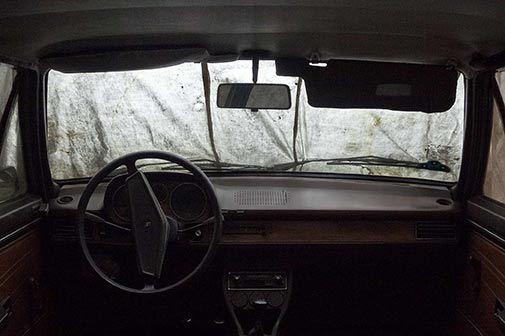
Above
all, what we see in the photograph are frames within frames — mirrors and
windows. Yet, neither do the windows reveal anything of the outside world, nor
do the mirrors disclose anything about the photographer. The windows are
covered with fabric and are opaque. The mirrors reflect the same opacity.
It
is this very opacity that keeps the photographer inside the car — and us inside
the photo.
*The title of the photo is Father. I have set aside the name Father to distance the reading of the photograph from the author’s intention. Here, Mirrors and Windows refers to the famous book and exhibition Mirrors and Windows (1978) by John Szarkowski. In that book,
looking at two decades of American photography, Szarkowski considers
photography either as a window onto the world or a mirror reflecting the spirit
and psyche of the photographer.