
Text
Mehran MohajerSeeing the Unseen
It
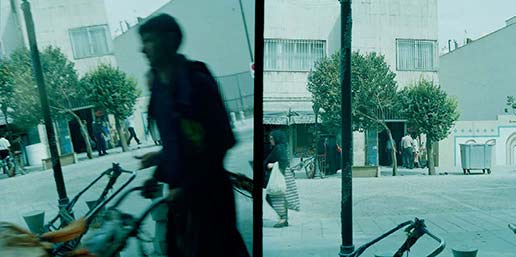
is difficult to try to see a scene that the photographer seems to have insisted
not to see, or perhaps wanted to photograph without seeing it. To be honest, I
don’t know what intention the photographer had when taking the picture, or why
they wanted another person to be blind to it and photograph the same scene as
well. What matters is that the connection between these two images is
compelling; they create a dual opposition that simultaneously deconstructs
itself. One picture is tilted, the other is straight. One is still, the other
dynamic. One is sharp, the other blurred. One has a busy foreground, the other
an empty one. Yet, in both, there seems to be little to see. They show the same
things we see every day but choose to ignore. The cycle of daily life does not
spin; rather, it slides and slips from one frame to another. Maybe it even
spills out beyond the photograph’s borders. The dominant green tint feels alien
and seems to suffocate the atmosphere of the pictures. Perhaps the stifling
space outside the image has seeped inside as well.
These two joined photographs are about photography and about life, but not like the twins of Arbus*. It is hard to say if we are seeing one picture or two, and this ambiguity is the beginning of their deconstruction. It is as if the photograph—or photographs—with irony, sarcasm, and parody simultaneously play with the mechanisms of life and the camera; from accidental cropping to continuous production one after another. Although these two twin frames differ significantly, they speak—still with irony and parody and despite their mechanical production—about solitude. The solitude of photographic experience and the solitude of lived experience. It seems this work questions the agency of the photographer within photography.