
Text
Najaf ShokriThe Legacy of Niépce
The very first photograph in history, created
through the efforts of Nicéphore Niépce, was neither a royal portrait nor a
landscape of the Palace of Versailles in the morning light. That image was a
straightforward example of what is insignificant: an uneven rooftop, a pigeon’s
nest, a short chimney, and a patch of light on an unmarked wall.
Photography began with the "mundane,"
and this humble, marginal appreciation has continuously extended throughout the
history of photography: Eugène Atget’s abandoned carts in the streets of Paris,
William Eggleston’s child’s tricycle, an unpleasant eaten watermelon in
Wolfgang Tillmans’ frame, a packet of French fries on a café table through
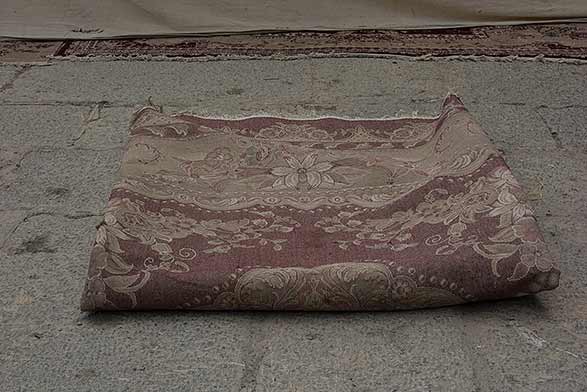
Stephen Shore’s gaze, and a folded carpet in the lens of Mehran Mohajer—all
stubbornly assert the same proposition: “being” precedes “necessity.”
To echo Wittgenstein, wonder lies not in how the
world is, but in the fact that it is.