
Text
Pouya KarimWatching the Event
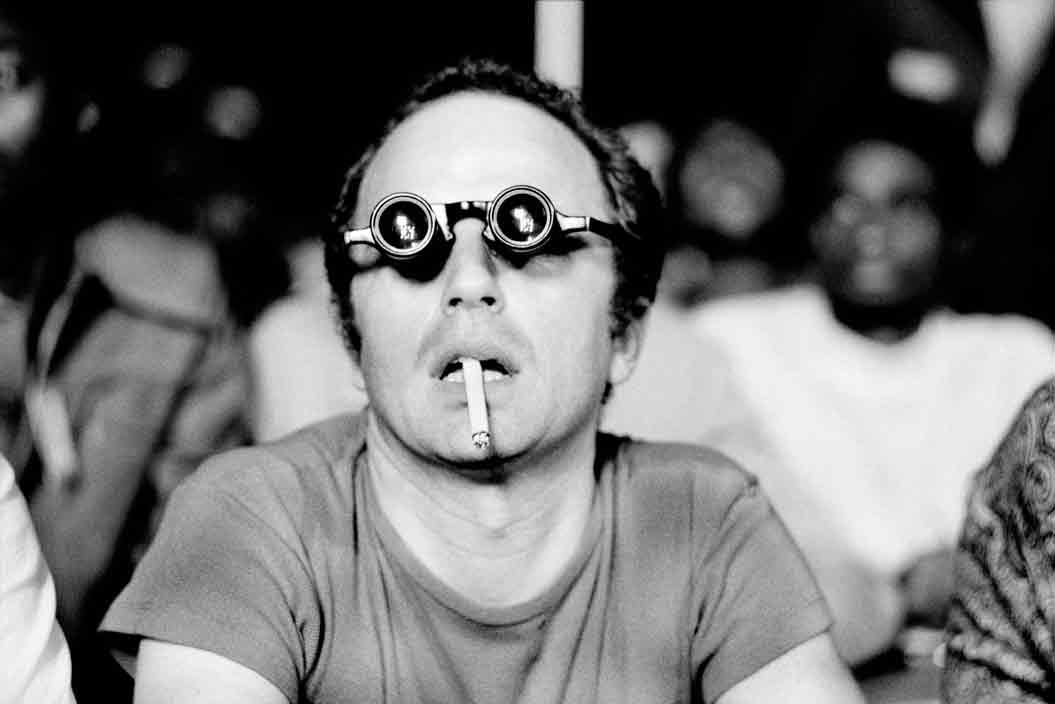
The spectator’s binoculars act beyond a mere visual tool; they become a
fundamental symbol encoding the desire to seize the moment and to look more
closely and deeply. It is as if the outside world beyond the frame is pulled
into the realm of the spectator’s gaze and is expanded doubly. The lit
cigarette adds a sense of coolness and habit to the depiction, yet combined
with the trailing upward gaze, it creates a narrative and meaningful tension: a
relaxed body contrasted with a mind that is restless at the height of movement
and expectation. The background of the subject is deliberately blurred and
de-identified so that the crowd loses individual identity, making the
spectator’s lived experience more striking. This conscious erasure transforms
the collective event into a personal and internal experience.
On the other hand, the boxing match within the present frame is no longer
just a fight but becomes a collective ritual amid the Cold War, the peak of
anti-racism movements, and the era of globalization, bringing gazes, emotions,
and bodies together in one place (Africa). The hero of the picture’s narrative
is not the boxer in the ring but the quiet, still spectator who, with his
intense gaze, claims the moment of the event as his own. Abbas Attar, with this
mythic selection, creates a new myth: "spectating as a historical
act." He reminds us that history is not only shaped by the hands of acting
heroes but is also written through the dynamic gaze of spectators who witness
it.
*Photo by Abbas Attar of the boxing match
between Muhammad Ali and George Foreman titled "The Roar in the
Jungle," 1974, Kinshasa.