
Text
Pouya Karim"There is no civilizational document that is
not at the same time a document of barbarism." - Walter Benjamin
Today, as the bond of the "Iranian Family"
has untied and the shelter of home bears the heavy burden of life’s hardships,
migration, and hollow politics, it is time to look at Mohsen Rastani’s
photographs with fresh eyes. The family was once a sturdy fortress; a refuge
for gathering, enduring, and collective memory-making. Now that barrier has
collapsed, leaving hearts stranded between exile and poverty. I believe Rastani’s
observant and archival camera lingers precisely on these cracks and fissures.
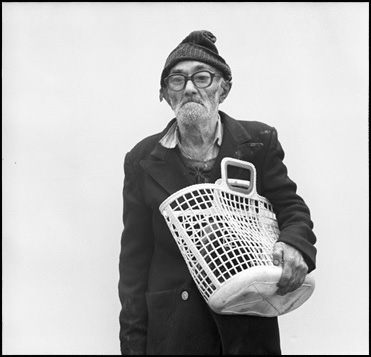
The photographer neither depicts the home nor the
neighborhood, nor a yard that bears signs of life and connection. The subjects
stand on this side of a blank white; without any place, geography, or class
remaining behind them. This erasure of place signals the collapse of the home
and family—the very realm that once enabled coexistence, dialogue, and the
reproduction of memory. The stubborn whiteness of the background wipes away
place and instead plants a timeless eternity; an eternity that is neither glorious
nor charming. It severs humans from their daily earth and transforms them into
mythical figures; myths of the immobilized.
An aged man with a frail body and helpless eyes
silently screams what has befallen him on this side of the white curtain.
Behind him, only a vast white screen unfolds. Now he is neither a symbol of our
historical resistance nor a representative of a nation’s millennia of
suffering; he is a human specimen who has attached his heart only to a life
with dignity and joy. His look meets mine, facing a worn basket that embraces
the history of this land’s petty economy and clings to him like an open wound.
The same basket that once carried fruit or the family's small goods now lives
as a vivid document of naked poverty and a sign of a fading history. Indeed,
history is not only the Treaty of Turkmenchay and the fall of the Shah; history
is the emptiness of darkness inside the whiteness of the basket.
Rastani portrays the Iranian Family within
scattered micro-narratives of the past; a failed history that finds no place in
books but lives in the pained faces of the poor, worn clothes, battered old
glasses, and the calloused and tired hands. Through the white frame, he strives
to present reality unmediated to the viewer; a history without rhetoric and
slogans, whose silence speaks louder than a thousand speeches.