
Text
Sogol Ghaznavi*"I Love That Which Is in Motion"
I look
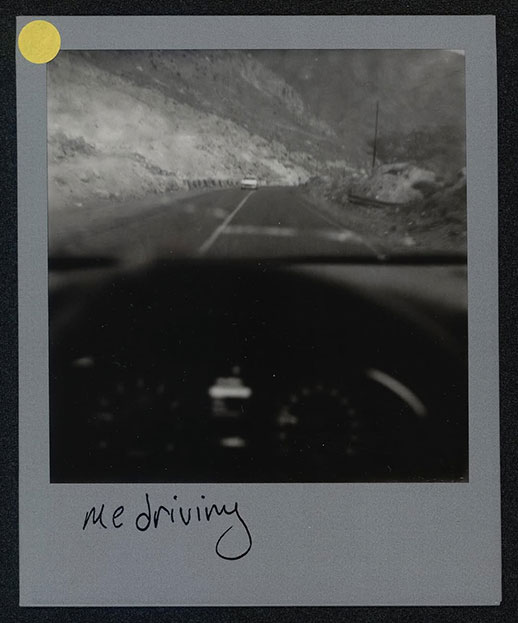
at the photographer’s trembling black-and-white snapshot, where light and
shadow divide the frame into two equal halves. I move into the bright upper
half and, through the car window, see the landscape of the road. It is as
though that small vehicle in the distance is the only sign of life in this
rocky wasteland. When I descend into the other half,
I arrive in the dark room of the car. The photographer—who must have been
driving at the very moment of taking the picture—cleverly places me in the position
of observer/driver and draws me into the long tradition of road photography.
Sliding
downward across the surface of the print, I come upon the simple inscription
beneath the image: Me driving. It resembles the casual notes one might
scribble in the margins of a diary. At first glance it seems like a mundane
caption and something meant merely to complete the photograph and reveal its
secret. Yet there is a pleasurable haste in the handwriting as if the vibration
of the road itself had traveled into the pen. The words suggest that they were
not written calmly at a desk, but hurriedly recorded in the very midst of
passage, preserved against the threat of forgetting.
Again, I follow the words. The photographer consciously uses the first-person pronoun to emphasize her own presence. The phrase no longer feels like an explanation; it becomes a confession. This photograph is about the personal experience of transit—not about departure, nor arrival, but about existing in the middle of the journey. The entire truth of the image seems condensed into that boundary between darkness and light, the place to which both photograph and text bear witness. It is there that they confess the same thing:"I love that which is in motion".