
Text
Farzin Azarm
Tehran, like any other metropolis, is full of grand
stories that absorb fleeting moments into themselves. It is a city overflowing
with crowded yet beautifully composed scenes. In Tehran one can practice street
photography in the spirit of Bruce Gilden, Joel Meyerowitz, and other great
masters of the genre, creating photographs of lasting value. The city is home
to countless people each carrying an endless story—stories that could each become a
photographic series of their own. Yet beneath the vast body of this city there
are still untouched places that reveal themselves only through brief moments of
pause along its overlooked edges. Here you find yourself suspended between the
natural innocence of a village and the harsh grandeur of a city yearning for
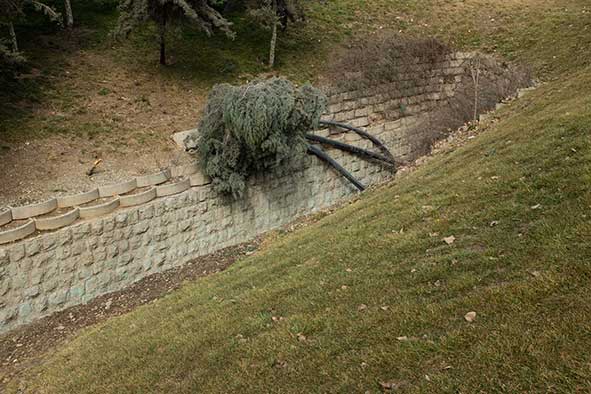
modernity. Standing before this tension you stop—and make an image of it. In this photograph the eye travels from left to
right. Dense layers of soil, grass, and stone blocks draw the viewer into the
depths of a pit whose bottom remains unseen. From within it, long black pipes
emerge like sharp claws, evoking a sense of menace. It is impossible to tell
how far these pipes extend beneath the earth or how deeply they gnaw at the
roots of the frail shrub standing beside them.
This photograph tells the story of Tehran: a city that
builds in order to destroy, and destroys in order to build again, pushing
relentlessly outward until no boundary remains. It becomes impossible to tell
where what once existed comes to an end and where what aspires to exist begins.