
Text
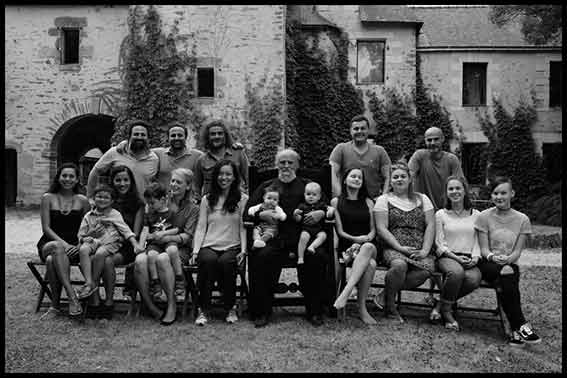
Pouya KarimThe central focus of the picture is Abbas Attar who sits on a somewhat
imposing chair like a satisfied ruler. At first glance the photograph expresses
a feeling of patriarchal power in relation to the family members around him.
But on the other hand, through the poses, gazes, domestic staging and close
interaction among family members, the photograph reveals a sense of an intimate
and dynamic atmosphere, reflecting the genuine bonds among the family members.
The deliberate arrangement of individuals speaks of the inner dynamics
within this family structure. The women, with their smiles, evoke feelings of
kindness and nurturing, while the men stand behind the women, playing a
supportive role. On the right side of the picture we see a gentle slope in one
of the benches, metaphorically representing the unpredictability of life and
its inherent struggles. This also reveals the shortcomings and doubts within
the seemingly strong family framework.
Family portraits are more or less intertwined with the concept of death, and
the image of the human skull has always signified the certainty of death’s
presence. In this photograph death appears in the form of a girl sitting at the
end of the bench, creating a striking contrast with the overall theme of life
and family. Over time the family portrait becomes an archive of memory,
preserving the tears and smiles of people who have crossed the threshold of
death. The depiction of the faces within the frame echoes the silent footsteps
of merciless time. Also the absence of faces that were once present speaks to a
painful coexistence between the vitality of the moment of photography and the
inevitable brevity of life.